I. Forum Schedule
Sichuan University Main Forum: Thursday, 26 November 2026
Sub-forum of College of Chinese Language and Literature: Friday, 27 November 2026
Format: Hybrid (online and offline)
II. College Introduction
The College of Chinese Language and Literature at Sichuan University, whose predecessors are Jinjiang Shuuan (Jinjiang Academy, 1704) and Zunjing Shuyuan (Zunjing Academy, 1875) , has a time-honored history. Chinese major has been one of its core disciplines when Sichuan University was founded in 1896 as Sichuan Chinese-Western School. In 1952, the original college was restructured as the Department of Chinese Language and Literature, which then was restored in 1994. Four years later, the College of Literature and Journalism at Sichuan University was officially formed. Till April 2026, the discipline of Chinese Language and Literature was reorganized and was merged into the new College of Chinese Language and Literature together with the Overseas Education College at Sichuan University.

The College ranks tops in the humanities nationwide for both of its high-level education and academic research. With the undergraduate education as its base and academic training as focus, taking international Chinese language education as a new direction, the diverse character of this college is clearly defined. It has two first-level disciplines, including Chinese Language and Literature, which was one of the five key disciplines of China officially approved, and Art, and a program of professional degree in International Chinese Education is also offered. In 2017, Sichuan University was authorized as one of the “Double First-Class” initiative universities, which prioritizes the development of 12 first-class disciplines and disciplinary group, including “Chinese Language and Literature and Global Communication of Chinese Culture”. Meanwhile, Chinese Language and Literature is rated as A+ (top 5 percent) and International Chinese Language Education B+ in the 5th China Discipline Ranking (CDR) at 2021.
The College is well known for its outstanding academics in the history. Xiang Chu and Zhu Guangqian have been the deans, Wu Fangji, Liu Dajie, Pan Chonggui, and Yang Mingzhao have been the chairmen of Chinese department. The College has 156 faculty and staff members for now, including 56 professors and 54 associate professors, among which there are 50 doctoral supervisors, one Distinguished Professor at Sichuan University who is also a Member of the European Academy of Sciences and Arts, 19 professors with national-level talent titles, 2 professors with a honor of Nationally Recognized Master Teacher, and 4 international faculties. They are affiliated with 13 teaching and research divisions including Theory of Literature and Art, Chinese Classical Philology, Ancient Chinese Literature, Modern and Contemporary Chinese Literature, Comparative Literature and World Literature, Linguistics and International Chinese Language Education, Art Theory and Film, Television and Media, Ethnic Minority Literature and Literary Anthropology, Advanced Chinese, Intermediate Chinese, Beginners’ Chinese, and General Chinese.
Remarkable outcomes of education have been achieved, boasting a top-quality curriculum of more than fifty courses. The faculty members have published 3 textbooks of “Marxism Theory Research and Construction Project”, as well as 18 textbooks that are funded by the Ministry of Education. One of them wins the Second Prize of the National Textbook Construction Award, and another is selected as a national-project textbook for undergraduate education during the 14th Five-Year Plan period. Besides, a number of faculty members have been rewarded with different honors nationwide, including being awarded the National Teaching Achievement Award five times, two staff have been recognized as National Master Teachers, one has been named a National Outstanding Educator, one has been recognized as a Pioneer in National Textbook Development, one has been named a National Model Teacher, and nine have received the Baogang Outstanding Teacher Award. Young lecturers demonstrate outstanding teaching ability: two have won awards National Teaching Competition Award for Young Lecturers in Higher Education Institutions, whilst several others have secured first prizes in provincial-level teaching competitions.
As for academic researches, the College has won the First Prize of Ministry of Education’s Outstanding Achievement Award in Scientific Research (Humanities and Social Sciences) five times, and two studies have received the funding of National Achievements Library of Philosophy and Social Sciences. The College is the parent organization of 5 institutions: the Institute of Popular Chinese Culture Studies of Sichuan University (a Ministry of Education Key Research Institute of Humanities and Social Sciences), the Collaborative Innovation Center for Chinese Multi-ethnic Culture Cohesion and Global Communication (co-established by Ministry of Education and Sichuan province), the Chinese Language Education Base of the Overseas Chinese Affairs Office of the State Council, the Research Base for the Application and Standardization of Chinese Language (a National Language and Character Promotion Base), the Literature and Art Criticism Base in China. It also serves as the host institution of 6 academic platforms, namely Digital Convergence Laboratory of Chinese Cultural Inheritance and global Communication, Comparative Literature Research Base and Su Shi Research Centre of Sichuan province, Chinese Poetry Research Institute, the Popularization Base of Chinese Traditional Culture and Social Science, and the Poetry Culture Popularization Base.
The College runs 22 types of academic journals, including 5 CSSCI-indexed journals—Culture Studies and Literary Theory, Studies on History of Chinese Language Academic Bulletin, Modern Chinese Culture and Literature, Studies on A Lai, and Studies on Marxist Aesthetics, and two English journals—Comparative Literature: East and West and Literature and Modern China. One project has been approved by the Major Academic and Cultural Engineering Projects of Philosophy and Social Sciences, and 69 projects approved by National Social Science Fund of China since the 14th Five-Year Plan, which ranks highly all over the country. Higher Education Outstanding Scientific Research Achievement Award (Humanities and Social Sciences) has been conferred on 8 faculty members, and Sichuan Provincial Philosophy and Social Science Outstanding Achievement Award on 23 faculty members. 151 essays have been published on prestigious journals, among which there are 5 works published on Social Sciences in China.
Being committed to the idea of “bringing in and going out” in terms of human resources and talent cultivation, the College supports its faculty and students in visiting top universities like Harvard and Cambridge. It has established bilateral partnerships, including academic exchanges, reciprocal visiting lectures, and joint researches, with more than ten universities of the United States, Canada, the United Kingdom, Germany, Spain, the Netherlands, Japan, South Korea, Singapore, consistently deepening its engagement in global dialogue and collaboration. It also actively recruits renowned overseas scholars, PhD degree holders with foreign nationalities, and graduates from top universities worldwide.
III. Discipline Construction
The discipline of Chinese Language and Literature is currently a national key first‑level discipline (rating A+ in the fifth round of Ministry of Education discipline evaluation). It is also a national base for cultivating talents and conducting scientific research in basic liberal arts disciplines, a Ministry of Education top‑notch student cultivation base with a Strong Foundation Program (Paleography Track). It has two national-level first-class undergraduate programs: Chinese Language and Literature and International Chinese Education; Doctoral Program in the First-level Discipline of Chinese Language and Literature, Postdoctoral Research Station of Chinese Language and Literature, and Master of Teaching Chinese to Speakers of Other Languages (MTCSOL).
Art Theory is an authorized first-level discipline for doctoral degrees. Its postdoctoral research station was approved and established in 2019, with sub-disciplinary research directions including Comparative Art, Art Theory and Criticism, Cultural Heritage and Art Anthropology, Art Production and Cultural Industry, and Film and Television Art Studies.
IV. Talent Needs
1. Top Talents
Academic masters and strategic scientists who play a major role in serving major national strategic needs and economic and social development, stand at the forefront of the discipline, and have the ability to catch up with and lead international advanced levels, including winners of internationally recognized top comprehensive and disciplinary awards such as the Nobel Prize, Fields Medal, and Turing Award, and top talents such as academicians of the academies of sciences and engineering of major scientifically and technologically developed countries.
2. Leading Talents
Leading scholars who have attained internationally recognized important achievements, enjoy substantial influence at home and abroad, and possess the capacity to lead teams in collaborative research; or leading talents who have long been engaged in frontline teaching, made important innovations in educational philosophies and teaching methodologies, achieved outstanding teaching outcomes and education quality, and made significant contributions to student training. They include professors and associate professors from world-class universities or world-class disciplines, chief scientists and core backbones at renowned global research institutes or R&D divisions of world-famous enterprises.
3. Young Top-notch Talents
Talents who have achieved landmark research results with important academic influence and have the potential to become academic leaders or outstanding talents in the field, including assistant professors at world-class universities or first-class disciplines, research talents in R&D divisions of world-renowned research institutions or world-renowned enterprises, or other outstanding overseas young talents.
4. Young Core Talents
(1) Postdoctoral Researchers
Postdoctoral researchers who have begun to emerge in their research fields, obtained relatively high academic achievements, and possess strong potential for innovative development, including postdoctoral researchers at world-class universities or first-class disciplines, postdoctoral researchers at world-renowned universities, postdoctoral researchers in developed countries and regions, other overseas talents, and some special overseas talents; or persons with doctoral degrees from high-level universities at home and abroad who intend to enter or have recently entered postdoctoral research work at our university.
(2) Doctoral Talents
Persons who hold a doctoral degree from a high-level university at home or abroad and have good scientific research experience and educational background.
5. Double-Hundred Talent Project
(1) Plan A
Generally under 42 years old (exceptionally outstanding candidates may be exempted from the age restriction. For humanities and social sciences, the age shall generally not exceed 52), with important achievements recognized by peers at home and abroad, and academic leaders in areas such as discipline construction, talent cultivation, scientific research, and technological innovation.
(2) Plan B
Generally under 35 years old (overseas recruitment under 38; for humanities and social sciences, generally under 40), outstanding young talents with exceptional potential for scientific research and technological innovation and outstanding academic achievements.
(3) Plan C (Overseas Young Talents Special Program)
Generally under 35 years old, overseas young talents with potential for scientific research and technological innovation.
Sichuan University will provide favorable remuneration, excellent platform resources, and high-quality supporting guarantees, with all-round support in research start-up funds, housing, pension, medical care, settling-in, visas, and children’s education.
V. Registration Process
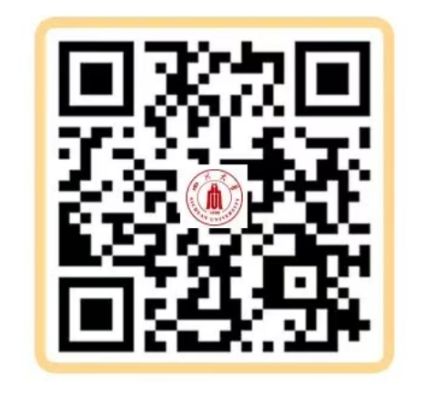
(1) Scan the QR code to register for the main forum
(2) Sub-forum registration process
Please send your curriculum vitae to wxbangongshi@sina.com. The CV should be named as “Young Scholars Forum – Name – Intended Position – Discipline Direction – Online/Offline”. The registration deadline for offline participants is November 18, and for online participants is November 25.
Contacts: Ms. Chen and Mr. Yin
Telephone: 028-85990998
Email: wxbangongshi@sina.com

